

Refugee Rescue Plan
This plan provides optimal strategies and methods for conducting large-scale rescue operations at sea.
| Yacht Name | M/Y --- | Shipyard | |
| Flag | Port of Registry | ||
| Revision | 1.1 | Date of issue | 16 Feb 2025 |
| Gross Tonnage | Date of Keel Laying | ||
| Company | Yachting Concept Monaco | Office Number | +377 99 90 16 30 |
| Director | Thierry Roux | ||
| Designated Person | Christophe Guegan | 24/7 Phone | +377 99 92 36 48 |
| Company approval | RO approval | ||
| Date | Date |
1. Introduction
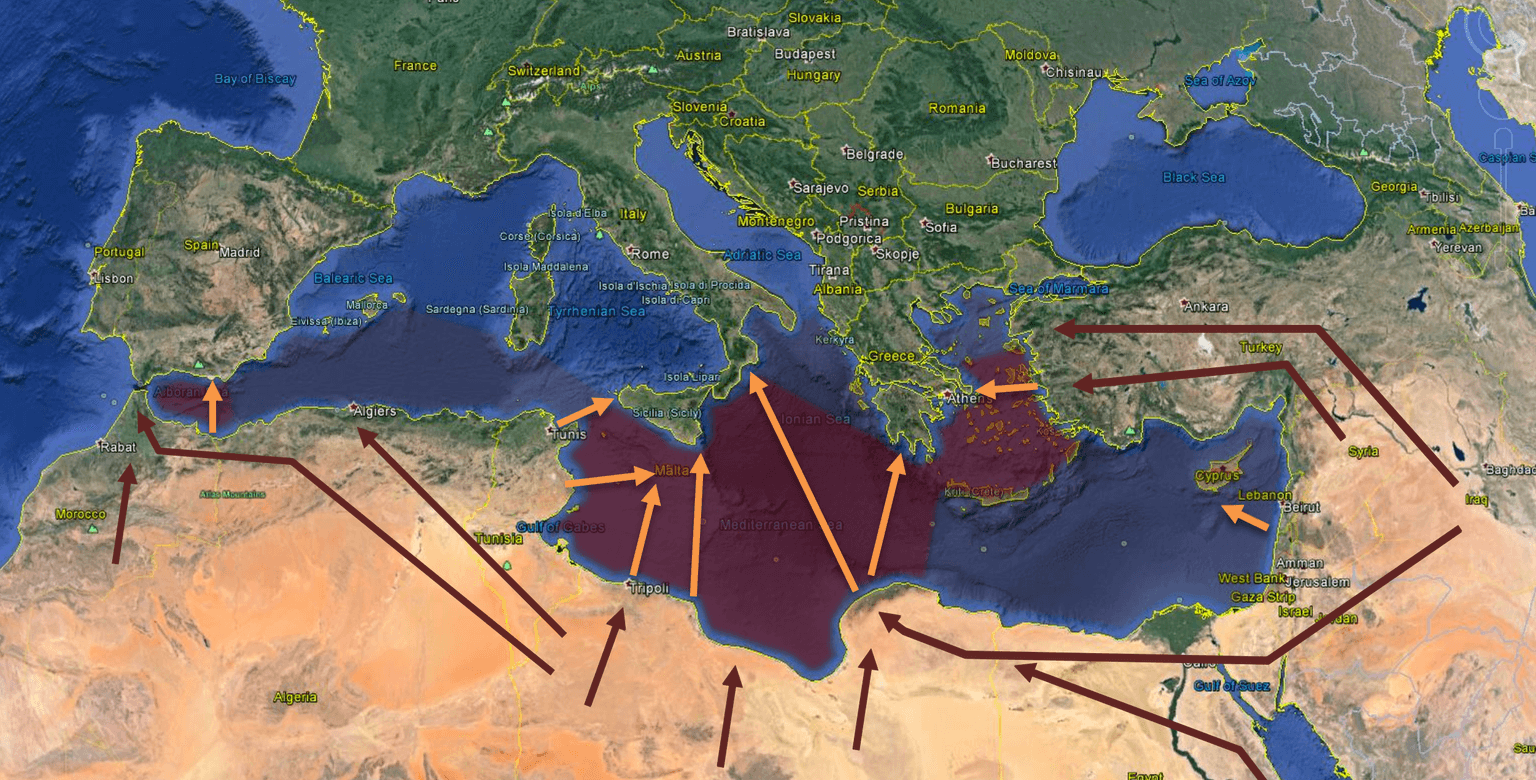
The number of refugees and migrants attempting to reach Europe has been increasing every year. As a result, private and commercial yachts are more often involved in rescue operations. It is important to note that many crews lack proper training to handle such situations effectively.
Vessels that rescue people are responsible for their well-being and proper management. Failure to handle these responsibilities correctly can lead to legal issues and damages to the reputation of the owner. It is crucial for yacht owners and crews to be aware of the situation and for captains to be prepared to handle such scenarios.
2. SOLAS Chapter V Regulation 33.1
The above extract from SOLAS is unambiguous and clear. The duty to provide assistance to anyone in Distress is an obligation and not a choice. The Master can turn down a request for rescue in only the following circumstances:
- He has insufficient bunkers to aid in the rescue effort.
- The rescue poses threat to his own ship and crew (e.g: rescue in hurricane, rescue in fire situations if own vessel is a loaded tanker).
- If other vessels are already in the process of rescuing.
- If it is indicated by the concerned MRCC that his assistance is not required.
3. Crisis Management Team
The crisis management team plays a crucial role in supporting both the Designated Person Ashore (DPA) and the yacht's masters during emergency situations. Their primary responsibility is to be available and capable of assisting in managing crises according to the emergency plan.
3.1. The DPA and the management company
The office and DPA should ensure that their security policies covers large-scale rescue operations and that crews receive training to handle such incidents in terms of compliance and practical skills. Captains should always consult with Chief Security Officers (CSOs) and DPAs before conducting large-scale rescues. The back office support provided to vessels during rescues should be legally compliant and supportive. Crisis management teams should make prompt and effective decisions during rapidly evolving rescue operations. The management company should seek immediate insurance and legal support, and inform the Flag State.
3.2. Shore agencies
The DPA should immediately contact support agencies to request the fastest port of disembarkation with suitable infrastructure for safely accommodating the migrants. The ship's master should also establish contact with the relevant authorities as soon as possible to receive instructions and support.
3.3. Masters
Managing regular yacht operations is already time-consuming and stressful. If a master has to handle a large-scale rescue crisis, it can become overwhelming. Therefore, it is crucial for the master to have a well-trained crew, established policies, procedures, and guidelines, and to delegate duties to officers to make the task more manageable and effective.
3.4. Officers
While bridge officers should have received training in security and crisis management, it is essential for the captain and officers to discuss the specific procedures beforehand and conduct drills with the entire crew. During crisis management, there should be no room for disagreements, and the entire crew should follow the same plan.
3.5. General crew
The crew forms the workforce and performs the majority of physical tasks on board. It is important to ensure their well-being through effective management, training, and appropriate equipment for their tasks. If crews are tasked with conducting large-scale rescue operations without proper training, they may feel uncertain in carrying out their duties. This lack of confidence can be noticed by the rescued individuals, leading to a lack of respect and confidence in the crew. In the worst-case scenario, it may create opportunities for illegal or criminal activities among the rescued persons. A confident and well-trained crew contributes to better overall management and the safety of everyone involved.
4. The plan
A large-scale rescue operation involves humanitarian and security aspects, but it also presents health and safety risks due to the unique nature of the task, the circumstances involved, and the influx of a significant number of unknown, untrained, and uncertified individuals onto the vessel.
- Plan Review: Prior to any event, it is essential to thoroughly review this plan to ensure that the correct procedures are in place. This ensures preparedness and readiness for a rescue operation.
- Training Scenarios: Regular training scenarios should be conducted to familiarise the crew with the plan and enhance operational efficiency. By practicing the procedures outlined in the plan, the crew can better respond to emergencies and understand their roles and responsibilities.
- Integration with ISM: For vessels operating under the International Safety Management (ISM) Code, this plan should be incorporated into the official procedures. It becomes an integral part of the vessel's safety management system, emphasising the importance of its implementation and adherence.
Remember, the plan is designed to address the unique challenges and risks associated with large-scale rescue operations. By reviewing and training according to the plan, the crew can effectively respond to emergencies, prioritise safety, and mitigate potential hazards.
4.1. Raising the Alert
Early warning is crucial to provide the crew with sufficient time to prepare the vessel for a migrant rescue operation.
- The Officer of the Watch should promptly raise the alert as soon as a migrant boat is sighted.
- Immediately inform the captain of the situation.
- Ensure the engine is prepared for immediate manoeuvres.
- Establish immediate communication with the following parties:
- Designated Person Ashore (DPA) or Management Office.
- Maritime Rescue Coordination Center (MRCC).
- Other vessels in the nearby vicinity.
By immediately raising the alert and establishing communication with the relevant parties, the crew can initiate the necessary actions and coordination for an effective response to the migrant rescue operation.
4.2. Conducting the rescue
The following should be considered and formally risk assessed while creating the plan :
- Approach to the distressed vessel(s):
- Account for bad weather conditions.
- Implement procedures to avoid collision with vessels that are unsafe, overloaded, lack ship handling skills, or are in need of rescue.
- Use of tenders and/or rescue boats during the rescue:
- Assess the risk of sinking or capsizing due to an unmanageable influx of persons.
- Consider the potential for collision, hull breach, or flammable hydrocarbon leaks from floating or submerged objects/debris/jetsam.
- Embarkation methods of the rescued people:
- Plan for the use of pilot/accommodation ladders/Swim ladder.
- Consider the needs of non-able rescued individuals (e.g., elderly, ill, injured, children, pregnant females).
- Use safety lines for individuals.
- Ensure all crew members engaged in the rescue operation wear life jackets.
- Account for conducting rescues at night or in adverse weather conditions.
- Recognise that rescued people may be fatigued and require physical assistance during embarkation.
- Crowd management:
- Control embarkation one by one.
- Detections of smugglers hiding between refugees.
- Implement methods to avoid overloading/overcrowding.
- Provide search and directions to rescued individuals.
- Take photos of every person loaded and document the entire rescue operation.
- Designate crew members for security and crowd control.
- Health and safety implications of searching and handling rescued people:
- Ensure the use of personal protective equipment (PPE).
- Address potential health risks, stress, manual handling, and injuries to crew members during manual handling.
- Consider the possibility of handling dead bodies.
!!! warning "DO NOT:"
- Threaten or intimidate rescued individuals.
- Display or use weapons in an aggressive manner.
- Engage in physical confrontations.
- Isolate any crew alone among the rescued group.
- Use the life rafts, as it may compromise vessel safety and potentially lead to conflicts among the rescued individuals.
Additionally, consider the following factors:
- Lack of space in accommodation.
- Main deck as the only area large enough.
- Insufficient SOLAS lifesaving equipment.
- Storage of dead/decomposing bodies.
- Provision of toilet facilities.
- Risk of crush injuries due to overcrowding.
- Physical limit for maximum occupancy leading to instability.
- Restricted areas and potential ingress due to overcrowding.
- Dangerous behaviour of rescued individuals.
- Lack of knowledge among rescued individuals.
- Designate no-smoking areas.
- Prevent theft/tampering/misuse of critical safety equipment.
- Guard against deliberate vandalism/sabotage.
- Address potential violence, disorder, and aggressive behaviour.
Sickness and diseases:
- Consider communicable diseases (e.g., Ebola).
- Address non-familiar or "third-world" diseases (measles, mumps, rubella, typhoid, cholera, tuberculosis, polio).
- Take precautions to avoid contamination from vomiting, diarrhoea, blood, or coughing.
- Implement infection control measures.
- Consider segregation by ethnicity or sex (provide separate areas).
- Ensure crew members have appropriate personal protective equipment (face masks, goggles, gloves, etc.).
Disembarkation of rescued people (similar to embarkation):
- Plan for ship-to-ship or ship-to-land disembarkation.
- Anticipate the potential for non-compliance if rescued individuals are not taken to their desired destination.
- Account for the impact of fatigue and relief on risk-taking behaviours (more haste, less speed).
4.3. Ship Security Plan
To comply with the ISPS Code, commercial vessels over 500 gross tons are required to have a Ship's Security Plan. It is also advisable for ships transiting areas prone to large-scale rescue operations to include a piracy section in their plan to ensure the safety of guests and non-essential crew members on board the vessel.
For vessels without a Ship Security Plan, captains should:
- Clearly identify the locking mechanism of external doors.
- Consider implementing a citadel strategy to protect guests and non-essential crew members during the operation.
The following considerations should be included in the Ship Security Plan:
- Conduct crew security briefings.
- Manage access control to the vessel.
- Rotate watches to maintain security coverage.
- Periodically conduct access control checks and monitor restricted areas.
- Maintain a visible security presence on board.
- Address crowd management to ensure order and safety.
- Prepare for potential violence related to organised crime or terrorism.
- Implement search procedures, identification, and listing of each individual.
- Enforce strict control and restrictions on social media usage.
By incorporating these measures into the Ship Security Plan, vessels can enhance onboard security, mitigate risks, and ensure the safety and well-being of guests and crew members, particularly during large-scale rescue operations.
4.4. Equipment for Medical Safety
Ensure the following equipment and materials are made available and ready before the start of the rescue operation:
- Extra food and drinks
- Sufficient water supply
- Plastic sheeting
- Work gloves
- Handheld metal detectors
- Loud hailer for communication
- First aid and medical supplies
- Chlorine-based cleaning products
- UHF on earpieces for confidential communication between crew members
- Anti-bacterial gel or wipes
- "Tally counters" to assist in accurately counting the number of individuals
- Waterproof, long sleeve coveralls or extra slicker suits
- pre-recorded phrases in Arabic
- Face masks
- Eye protection
- Strong garbage bags
Having these essential items readily available will contribute to the medical safety and well-being of the rescued individuals as well as the safety and protection of the crew during the rescue operation.
5. After Conducting The Rescue
After conducting the rescue operation, while prioritising saving lives and preventing injuries in accordance with SOLAS regulations, it is crucial to ensure the security of the vessel and its crew. Maintaining command and control over the individuals embarked during the rescue is essential, as the chaotic and confusing nature of the situation can easily lead to a loss of control. Effective crowd management skills will be necessary to maintain order.
To ensure a well-coordinated response, we recommend designating specific duties to officers and crew members. This will help maintain command and control over the situation. Clear and constant communication is vital to keep the captain informed about the complete situation. It is advisable to establish a predetermined bridge and deck crisis management team that can record and report information as required.
By prioritizing security, maintaining command and control, and establishing effective communication channels, the vessel and its crew can effectively manage the aftermath of the rescue operation while ensuring the safety and well-being of all individuals on board.
5.1. Create Records
- Maintain written records documenting the number of individuals rescued, their gender, age, and general health condition.
- Tag each individual with a name or number for identification purposes.
- Prioritise and record any individuals requiring immediate medical attention.
- Photograph all persons rescued. This serves as a useful evidence trail in case allegations are made or there are disputes regarding who was on the vessel during the rescue operation.
- Another option can be to record a video for each individual, asking his/her name and health situation.
By diligently recording this information and capturing visual evidence, you can ensure accurate documentation and maintain a clear record of the individuals rescued. This information can be invaluable for reporting purposes, addressing potential issues, and maintaining transparency in the rescue operation.
5.2. Searching
Personnel conducting the searches should remember the following
- Explain that you are about to carry out a search and you are about to touch them
- Least intrusive manner
- Use a metal detector
- Maintain dignity
- Is it legal?
- Male to Male
- Female to Female
- Wear PPE (Gloves, Mask, eye protection)
- Have a witness (Preferably an Officer)
5.3. Belongings Record and Storage
- Search all baggage
- Ask for any belongings and documents that they are carrying
- Take an inventory of any belongings
- Place all in a plastic bag and add a copy of the inventory
5.4. Designated Group Area
- Ensure that there are at least two crew members with every group
- Keep them in sight at all times.
- Conduct daily roll call checks of the embarked rescued personnel.
5.5. Accommodations
When providing accommodation for rescued individuals:
- Check the accommodation area for any potential weapon
- Empty and secure any lockers in the accommodation area.
- Ensure emergency stores, firefighting and medical equipment are easily accessible.
- Keep records of the accommodation.
5.6. Victualing
The master and cook should arrange meal times to divide rescued persons into manageable group sizes. The crew should eat separately. Depending on the overall rescued group size, it may be an option to allow the rescued group to use the crew mess. Water should be allocated to limit movement around the ship outside of meal times. If the number of rescued people is not manageable inside, meals should be distributed in a dedicated area.
5.7. Hygiene and Sustenance
When addressing hygiene and sustenance considerations during a rescue operation, it's important to keep in mind the following:
- Handling and storage of bodies: Crew members may not have received adequate training to handle the recovery and storage of deceased individuals. It's crucial to recognise that the deceased may include vulnerable groups such as the elderly, small children, and infants. This can evoke strong feelings of empathy among crew members, potentially leading to distress. Senior officers should monitor the emotional well-being of the crew and provide support as needed.
- Separate storage of bodies: If refrigerated areas are used to store bodies, ensure they are physically separated from food storage areas to maintain hygiene and prevent cross-contamination.
- Mental and emotional preparation: Prepare yourself and the crew for what they may encounter during the operation. Discuss the sights and emotions they are likely to experience. Emphasise the positive value of the task, encourage a step-by-step approach, and remind them to pace themselves. Stress the importance of always maintaining respect and avoiding conflicts.
- Communication with the rescued group: Explain to the rescued individuals what is happening to the bodies, as their family members may be distressed. Managing their emotions and providing support during this difficult time is crucial.
- Crew safety and support: The crew should prioritise their own safety and look out for each other's well-being. Implement a "buddy system" to monitor one another for signs of distress. Proper personal protective equipment (PPE) should always be worn when handling bodies to ensure the safety and health of the crew.
By considering these factors, addressing the mental and emotional well-being of the crew, and maintaining hygiene standards, you can create a more compassionate and supportive environment during the rescue operation.
6. Communications
6.1. Appointed liaison officer
The master should designate an officer with strong communication skills to serve as the liaison between the rescued group and the ship's crew. This ensures that the master can focus on managing the ship while providing a single point of contact for both the crew and the rescued group. It is recommended that this officer be trained in crisis management.
6.2. Appointed group leader
If there is a language barrier, identify someone within the rescued group who can assist with communication. Look for individuals who may demonstrate leadership qualities or designate a group senior/leader.
6.3. Information and briefings
Maintain good lines of communication and provide regular updates and briefings to keep everyone informed. Clear communication helps alleviate stress and anxiety among the rescued group, reducing the likelihood of potential problems or control issues. Communication can be a powerful tool for calming individuals if used appropriately. However, it's important to only communicate necessary information related to the rescue operation and avoid discussing sensitive ship-related matters with the rescued group.
6.4. Regular Briefings
The captain should regularly communicate with the liaison team to stay informed about the situation and the needs of the rescued group. These briefings should be conducted separately from the rescued group. The liaison team should provide honest, open, and frank updates on the situation. Support should be provided to the liaison team, as this role can be highly stressful. Additionally, the master will conduct regular interviews to monitor the crew's morale and mental state.
6.5. Audio/Visual/Non-Verbal
Communication between crew and rescued individuals may be challenging due to language barriers, large numbers of people, spread-out locations, and difficult weather conditions. Non-verbal mass communication should be considered to manage and reassure those who have been rescued.
- Consider using loudspeakers or PA Systems.
- Create pre-recorded Arabic phrases that can be played over mass communication devices.
6.6. Social Media
Ensure that communication, including social media use, is controlled by the shore company. Crew members should not post on social media or communicate with relatives ashore without proper authorisation. Uncontrolled communication can lead to public or political reactions that may jeopardise the safety of the yacht, the crew, and the rescued individuals.
7. Office Emergency Contingency Plan
7.1. The management company role
- Maintain the contact with the vessel 24/7 until the end of the situation
- Maintain the contact with support agencies
- Provide help for emergency evacuation and medical assistance
- Provide support for legal and insurance matters
- Mitigating financial impact
- Maintain the authority and chains of command (master’s overriding authority)
- Deal with government agencies (See support agencies contact details)
- Dealing with Next of Kin/welfare
- Manage the communication with the media
- Monitoring, measuring and lessons learned
- Prepare the yacht business resumption plan
- Conducting drills and training
- Post incident reporting
- Review and audit procedure
7.2. Post incident Human-resources management
- Hours of work/rest
- Potential time delays (for crew changes)
- Crew may have to be interviewed by authorities (delay)
- Time/pay/conditions disputes
- Potential temporary Non-compliance with MLC during process of rescue
- Compensation claims for injury, psychological trauma, loss of time/earnings due to conducting rescue (crew)
- Consider time off for crew (“decompression”) and longer term management of psychological impact.
8. Annexes
9. Revision History
| Version | Date | Editor | Revision History |
|---|---|---|---|
| 1.0 | 26 Jan 2024 | Christophe Guegan | Initial Commit. |
| 1.1 | 16 Feb 2025 | Christophe Guegan | Upgrade format. |
Reduced Safe Manning
This letter is a template to be used to request and document a Flag-State acceptance for temporary reduced manning while the yacht remains alongside and non-operational in port.
Mooring Plan
This plan provides detailed instructions and guidelines for the safe and efficient mooring of the vessel.