

Hazardous Chemicals
This plan provides detailed instructions and guidelines for the safe handling and management of hazardous chemicals on board the vessel.
| Yacht Name | M/Y --- | Shipyard | |
| Flag | Port of Registry | ||
| Revision | 1.1 | Date of issue | 03 Mar 2025 |
| Gross Tonnage | Date of Keel Laying | ||
| Company | Yachting Concept Monaco | Office Number | +377 99 90 16 30 |
| Director | Thierry Roux | ||
| Designated Person | Christophe Guegan | 24/7 Phone | +377 99 92 36 48 |
| Company approval | RO approval | ||
| Date | Date |
1. Objectives
This procedure describes how to control hazardous substances at work to prevent ill health, fire, and explosion. Storage of hazardous chemicals onboard can lead to dangerous situations due to the unstable nature of vessels. Flammable liquids, acids, and toxic chemicals must be handled with care.
Every year, thousands of workers become ill from exposure to hazardous substances, developing lung diseases such as asthma, various cancers, and skin conditions like dermatitis. Since symptoms can take years to develop, it's crucial not to continue practices that expose personnel to harmful substances, even when no immediate signs of illness are apparent.
Yachting Concept Monaco requires yachts to control substances that are hazardous to health. The responsible officers (Chief officer / Chief Engineer) are required to prevent or reduce crew members exposure to hazardous substances by:
- finding out what the hazards are;
- safely store chemicals onboard;
- deciding how to prevent harm to health (risk assessment);
- providing control measures to reduce harm to health;
- providing information, instruction and training for crew members;
- control of onboard forbidden materials like Asbestos, …
- planning for emergencies.
2. Hazard of a chemical product
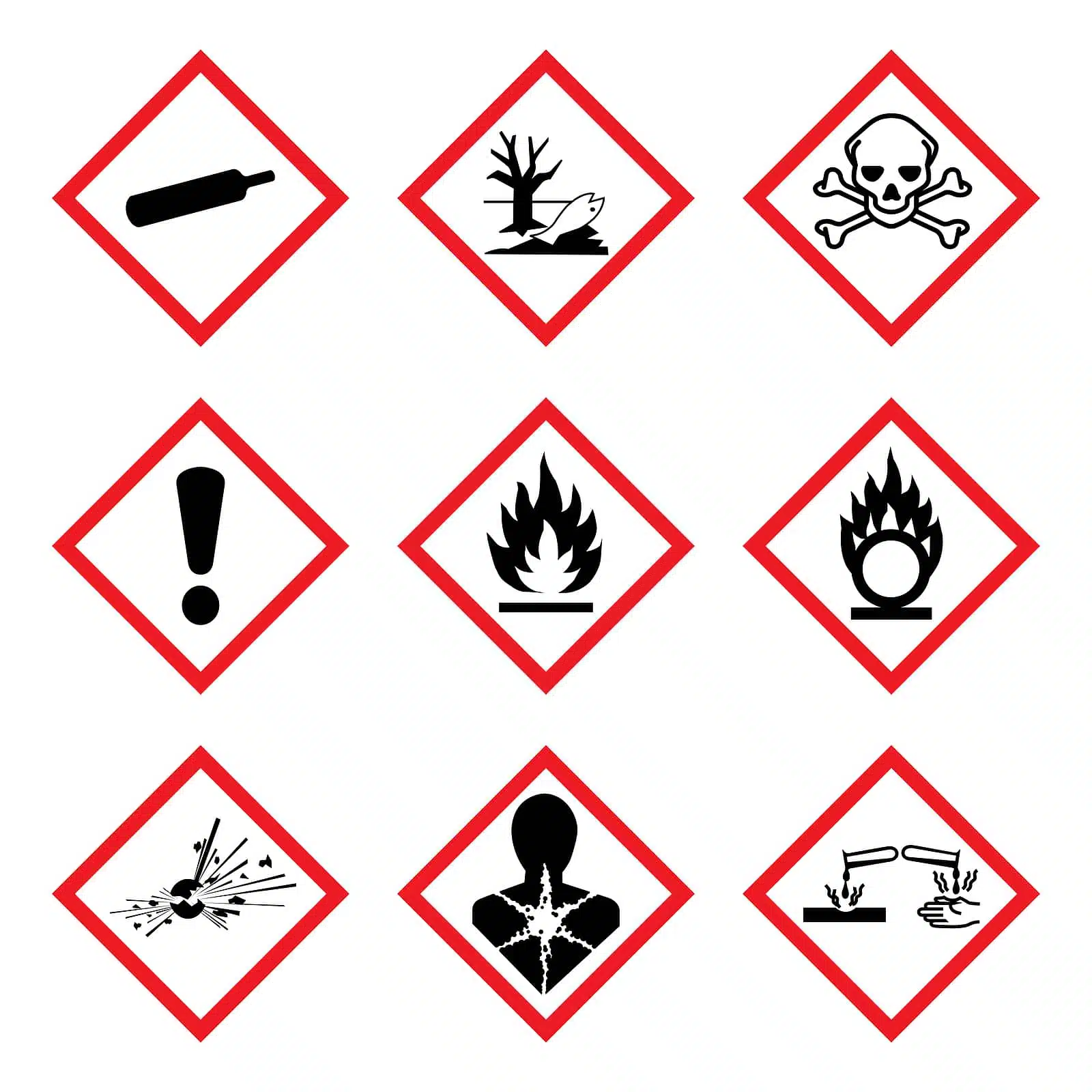
In determining which substances are harmful, you can find out by:
- checking the symbols on the packaging;
- checking information on the safety data sheet;
- asking the supplier, sales representative and contractor;
Then check if the product is:
- Inflammable, highly inflammable or explosive;
- corrosive (Hi or low pH);
- poisonous;
- forbidden onboard vessels (Asbestos, …)
- produce gas, fume, dust, mist or vapour.
3. Safe Storage
3.1. Inflammable
Paint and flammable liquids are required to be stored in a dedicated approved paint locker as per SOLAS by Class/Flag. If the space is more than 4m , it must be equipped with a dedicated fixed fire fighting equipment and fire detection. If the vessel is not provided with a dedicated space, flammable liquids must be stored in a place with minimum electric components, APEX. Well ventilated and far as possible from critical equipment of the vessel. The crew will provide a risk assessment for the storage of inflammable liquids onboard.
3.2. Explosives
Gas bottles (Butane, Propane for galley, barbecue, welding gas…) should have their own storage, usually outside, well ventilated and as far as practical from critical equipment of the vessel. Sundeck should be considered if possible.
Gas canisters, sprays and flammable aerosols can be stored in place as far as practicable from areas subject to high risk of fire (Engine room, galley, laundry, …)
3.3. Corrosives
Acid and caustics storage must take into consideration the risk of spillage, fall over and the risk container melting down against high temperatures of fire.
Container should be stowed in low compartment in a way that they cannot move or fall. Clearly identified and with adequate PPE immediately available.
3.4. Poisonous
Product which potentially dangerous for the health, should be stored in a place that prevent unauthorised access, for non-trained personnel, guests or kids. If necessary, in a padlock protected locker.
3.5 Forbidden materials
Any time a crew member is in a position to find suspect material —such as when dismounting equipment, examining ceilings, or inspecting void spaces— any material should be considered as suspect of containing Asbestos. In case of any doubts, a senior officer should be immediately alerted, the area immediately evacuated, and shore-based decontamination teams called for asbestos removal if such the case.
When any new piece of equipment may be installed onboard, as per IHM required, the provider should deliver a certification station that this equipment is free of any hazardous material.
4. Crew Training
4.1. Competence
Ensure that whoever use any chemical onboard is competent - they have the necessary skills, knowledge and experience. Involve crew members in developing control measures to make sure they are suitable for the way they carry out the work. Encourage them to suggest improvements, and to report anything they think might be going wrong. It is the responsibility of the master that no crew member without the required training is in a dangerous position of manipulation hazardous material.
4.2. Training, instruction and information
Explain to crew members, and anyone else who needs to know, what the dangers are. It is poor practice just to hand them a page of written information.
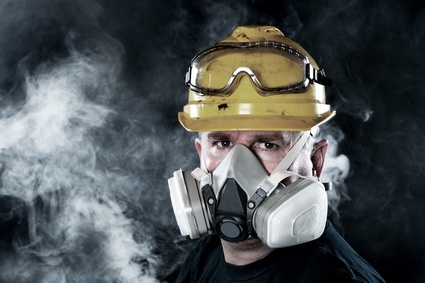
- Show workers how to use PPE properly.
- Carry out practice drills for cleaning up spills safely - do this before any spillages happen.
- If workers need to use respirators, they also need face fitting and training.
- If they need to use protective gloves, they need to know how to put them on and take them off without contaminating their skin.
5. Protective measures
5.1. Control measures
Control measures are always a mixture of equipment and ways of working to reduce exposure. The right combination is crucial. No measures, however practical, can work unless they are used properly.
So any ‘standard operating procedure’ should combine the right equipment with the right way of working. This means instructing, training and supervising the workers doing the tasks.
Choosing protective measures in order of priority:
- Use a safer form of the product, eg paste rather than liquid.
- Change the process to emit less of the substance.
- Store properly so that the product does not escape.
- Maintain an inventory in Deepblue© with quantity and up-to-date MSDS.
- Ventilate emissions of substance near the source.
- Display warning signs to prevent explosion or intoxication.
- Provide PPE such as gloves, coveralls, masks and safety googles that fit the wearer.
5.2. Assessing risks
Risk assessment is not just a paper exercise. It’s about taking sensible steps to prevent dangerous situation for life, the vessel or the environment. You need to know how workers are exposed, and to how much, before you can decide if you need to do anything to reduce their exposure. Risks assessments can be for example:
- location of the inflammable products
- tasks involving crew exposed to potentially heath
- leaks, and prevention of pollution
Appendix A: Risk Assessments
Inflammable liquids
| Risks | High risk of explosion of the vapours |
|---|---|
| Control Measures | Due to the high volatility of the inflammable liquids, they must be stored in a well ventilated location onboard, away from electric cupboard. The liquids must be safely stowed. Prohibit any dangerous goods adjacent to accommodation or critical vessel equipment. An extinguisher must be available at all time close to the location. “No smoking” signs displayed. |
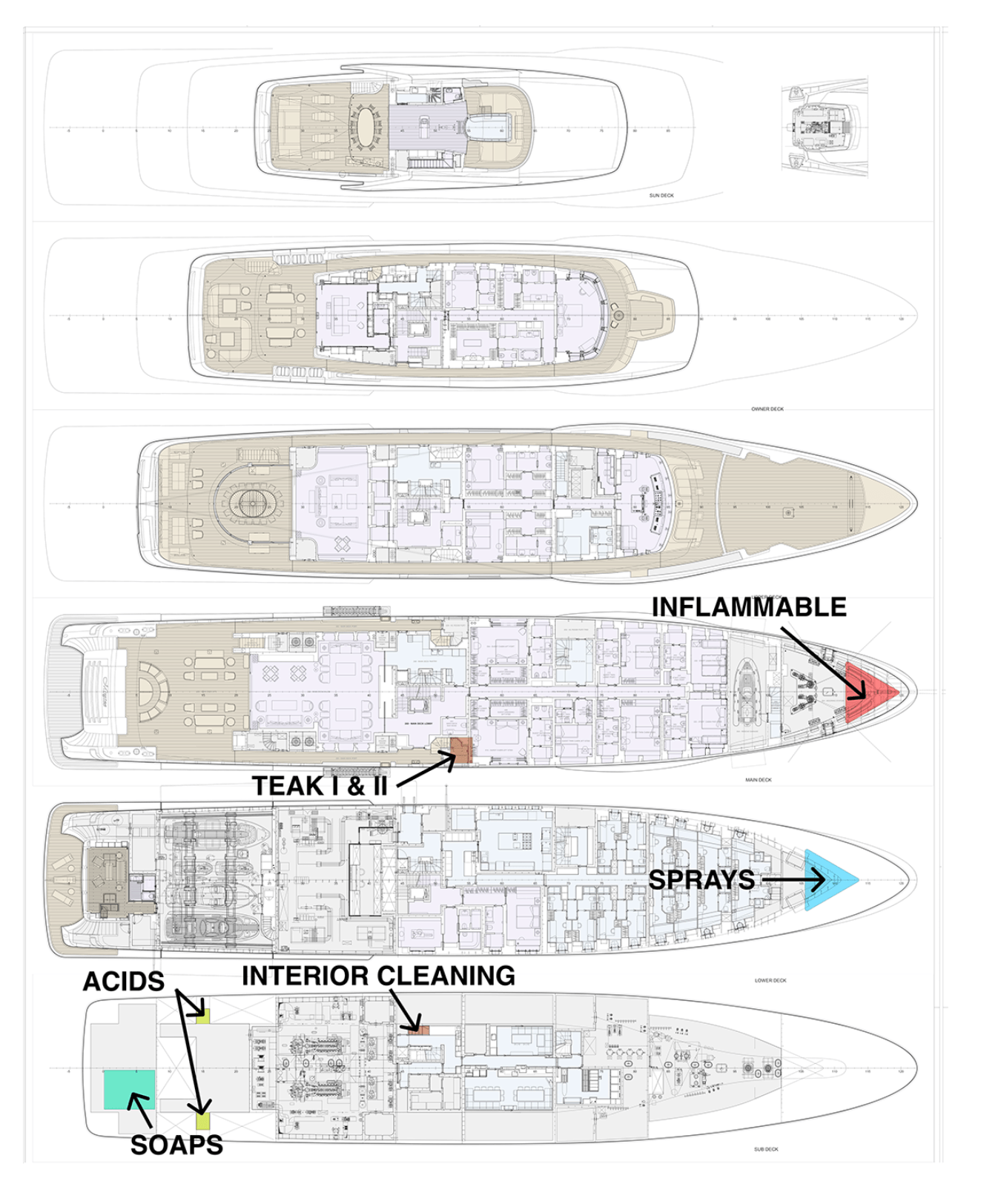
| Location Onboard | Mooring Station Forward |
Acid liquids
| Risks | Risk of skin/eye contact causes severe burns with redness, swelling, pain and blurred vision. Permanent damage including blindness can result. |
|---|---|
| Control Measures | Safe stowage of liquids inside holding container. Provide PPE available locally (Gloves, Protection googles) |
| Location Onboard | Engine Storage Voids |
Other products
| Risks | Dissemination of all the products onboard and lack of training |
|---|---|
| Cleaning Products | Interior cleaning products can be stored in sub-deck lobby provided they are not opened. |
| Deck Cleaning product | Some deck cleaning product may have a strong pH (sometimes > 9) Therefor they should be used carefully with care by trained crew only and with PPE. |
| Poisonous | Chlorine and Silver Ion must be handled with the same care of acid liquids. |
| Compressed gas canister | Cartridge should be stored in a place with low probability of fire (e.g. not in engine room, galley, laundry, ... ) |
| Butane/Propane gas bottle | The vessel does not carry any. |
| Teak phase 1 & 2 | Both of these products are high and low in pH. Therefore must be stored away from guests area to prevent unauthorised access. |
| Paint soap | The hull soap used onboard shall only be pH neutral, therefor not considered as a dangerous chemical agent. |
| Asbestos | When potentially discovering asbestos, crew members should wear face masks at all times and immediately alert a senior officer upon finding any suspect material. |
Appendix B: Dedicated storages onboard
6. Revision History
| Version | Date | Editor | Revision History |
|---|---|---|---|
| 1.0 | 29 Nov 2021 | Christophe Guegan | Initial Commit |
| 1.1 | 03 Mar 2025 | Christophe Guegan | Added Asbestos Consideration |
Mooring Plan
This plan provides detailed instructions and guidelines for the safe and efficient mooring of the vessel.
Carriage of Additional Passengers
Procedures and risk assessment framework for carrying guests above the vessel's normal licensed capacity during static charter events alongside and at anchor, in compliance with Cayman Islands Guidance Note CIGN 2025-06.