Mini-ISM Manual
This Mini-ISM Manual sets out the core principles, policies, and procedures required to support safe and compliant operations on yachts under 500 GT. It is intended as a practical reference for Owners, Masters, and crew, and provides a structured framework for day-to-day safety management, emergency preparedness, and continuous operational improvement.
1. Introduction
Yachts engaged in trade under 500 gross tonnage (GT) must maintain a mini-ISM system on board. Privately used yachts under 500 GT may implement the system voluntarily to adopt recognised safety management good practices. This manual presents a simplified application of the International Safety Management (ISM) Code for small yachts. It documents how safety is managed and recorded on board for the benefit of all personnel.
Yachting Concept Monaco provides simple, practical guidelines to establish a safe working environment, including:
- Health and Safety Protection Policy
- Procedures for the Safe Operation of the Vessel
- Maintenance of the Vessel and Equipment
- Procedures for Reporting Accidents and Near-misses
- Procedures for Responding to Emergencies
- Crew Training and Familiarisation
- Preparation for Emergencies and Recording of Drills
- Lines of Communication between Ship and Shore
- Demonstration of Compliance by the Master during survey
The mini-ISM framework enables an effective safety management system for vessels under 500 GT. Even with a reduced complement, the crew can maintain an efficient and robust level of safety.
Yachting Concept Monaco works with the crew to tailor a yacht-specific system and to train officers for smooth operation of procedures. Operational responsibility remains with the Owner and Master; the company is not responsible in case of an accident.
2. Overview
Effective safety management requires clear leadership and commitment at every level. In safety, health, environmental protection, and workplace practices, the commitment, competence, motivation, and attitudes of individuals determine outcomes.
Yachting Concept Monaco recognises the overriding authority of the Master and the Master’s responsibility to make decisions relating to safety and pollution prevention. The company provides the resources necessary to support the Master in carrying out these duties.
3. Safety policy
The safe operation of managed yachts and the safety, health, and security of all crew members are paramount. The company encourages dialogue and feedback from everyone involved in and affected by the Safety Management System to drive continuous improvement.
Yachting Concept Monaco’s objectives are to reduce the risks of accidents, incidents, and work-related ill health. The company ensures that all personnel involved in the management and operation of yachts receive adequate training to remain competent. The aim is to prevent incidents and accidents; where prevention is not possible, the system enables efficient emergency response and a timely return to safe operations.
4. Environmental protection policy
Yachting Concept Monaco recognises the negative impact that pollution from ships can have on the marine environment. Masters and crew are expected to adopt a responsible attitude to environmental protection, comply with the International Convention for the Prevention of Pollution from Ships (MARPOL) and all applicable laws and regulations, and take the utmost care to prevent pollution.
In the event of a pollution incident involving any managed yacht, Yachting Concept Monaco will provide appropriate assistance to the yacht and to Flag and Port State authorities to minimise the effects of the pollution, and will support clean-up efforts as requested. Waste products are to be disposed of using approved procedures and facilities. Environmental protection is the responsibility of every individual involved in yacht management and operation and is to be applied in every task.
Yachting Concept Monaco is committed to managing yachts to high Health, Safety, and Environmental standards and to meeting duties and obligations arising from Flag State and applicable international legislation.
5. Drugs and alcohol
All personnel on yachts have safety- and security-critical roles. The excessive use, misuse, or abuse of drugs or alcohol endangers the yacht and crew. While on duty, crew members shall not be under the influence of drugs or alcohol. Excessive use, misuse, or abuse will be treated as a disciplinary offence and may lead to immediate dismissal.
See our Drug and Alcool Policy for more information.
The use, possession, or distribution of illegal drugs and substances is a criminal offence. The company will assist appropriate law-enforcement agencies. Unannounced drug and alcohol testing may be carried out on a random basis by an independent third party appointed by Yachting Concept Monaco.
6. Fatigue
Fatigue increases risk. The company assists Owners and Masters to ensure yachts are adequately crewed with sufficiently trained and appropriately qualified personnel so that all legislation, guidance, and advice relating to hours of work and rest are followed.
All personnel are required to comply with hours of work and rest requirements under the Maritime Labour Convention (MLC). Crew members shall complete a day‑by‑day record of hours of rest each month, verified by the Master, to monitor compliance with minimum requirements.
7. Harassment and bullying
Harassment and bullying include acts of intimidation, coercion, interference with another seafarer’s work, and conduct based on gender that affects dignity at work and is unwanted, unreasonable, and/or offensive to the recipient. Such conduct will not be tolerated by Yachting Concept Monaco.
Cyberbullying: the use of modern communication technologies to harass, embarrass, humiliate, threaten, or intimidate—using the yacht’s or company’s systems is a serious breach of the code of conduct and will result in disciplinary action.
All complaints of harassment and bullying are treated seriously and in confidence. Affected personnel may report concerns to a Senior Officer on board or to a manager ashore. Reports made in good faith will not result in penalisation or victimisation.
8. Code of Conduct
The Code of Conduct for the Merchant Navy defines acceptable and unacceptable behaviour and provides the framework for disciplinary action. A copy should be made available on board.
9. Implementation
Yachting Concept Monaco supports crew in implementing and maintaining these policies at all levels by providing templates from the Mini-ISM library adapted to the yacht’s size and operation.
The company conducts audits and checks to verify that policies are displayed in relevant locations, understood by crew, and that procedures are being followed. This verifies correct implementation of safety procedures on board.
10. Training
All personnel shall receive training appropriate to their tasks. The Master is responsible for ensuring training is provided and that crew members understand the relevant regulations and rules.
As a minimum:
- The Master holds relevant qualifications.
- Crew members hold relevant qualifications and any additional training required for their designated duties.
At the first opportunity after joining the vessel, each crew member shall receive familiarisation and instruction in onboard procedures, including (as applicable):
- Mooring and unmooring
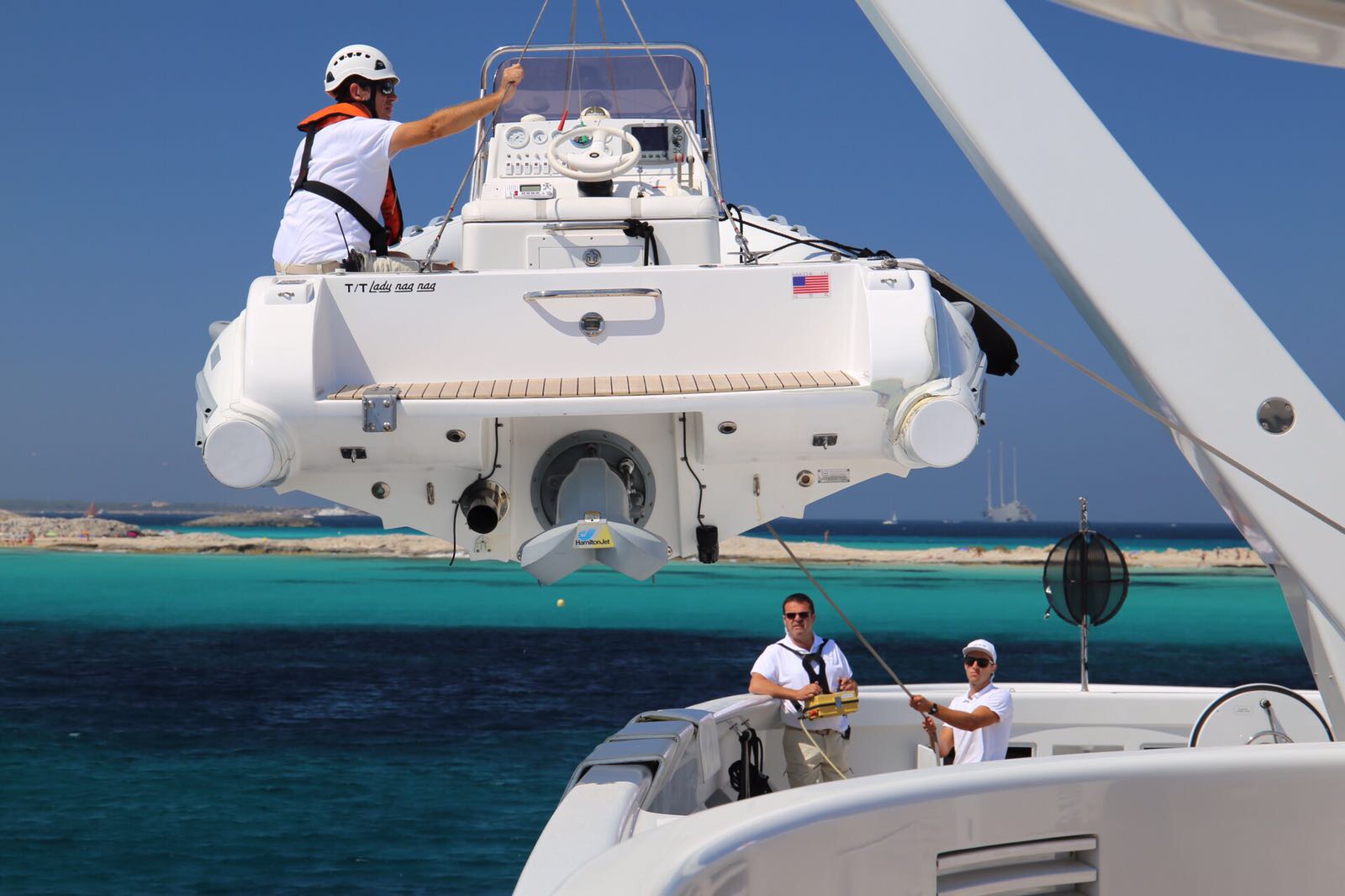
- Launch and recovery of survival craft
- Evacuation from all areas of the vessel
- Donning of lifejackets
- Use and handling of fire-fighting equipment
11. Onboard procedures
Simple written procedures shall be developed for the operation of the vessel using company templates. These include, but are not limited to:
- Testing of equipment, including steering gear, prior to commencing a passage
- Navigation and vessel handling
- Maintenance routines
- Bunkering operations
- Watertight/weathertight integrity
- Emergency towing
- Safe use of personal watercraft (PWC) and qualification of operators
12. Preparation for emergencies
The vessel’s predictable emergencies shall be identified. Drills shall be conducted regularly to practise handling these emergencies and evacuating the vessel.
Drills include, but are not limited to:
- Fire‑fighting and abandon ship
- Recovery from enclosed spaces
- Loss of power and/or steering
- Grounding, flooding, collision
- Man overboard (MOB)
- Medical emergencies
All personnel shall participate in exercises. Roles and responsibilities are defined in the Muster List, which shall be posted in crew areas. Each crew member is expected to understand their role.
All exercises, including the names of participants, shall be recorded. Regular safety meetings are recommended to strengthen onboard safety culture.
13. Reporting of accidents
Vessels operating under mini-ISM shall report accidents to the company in accordance with a documented procedure. All accidents and near‑misses shall be recorded and reported to the Company/Owner. Corrective actions shall be implemented to improve safety.
14. Maintenance of the vessel and equipment
Planned and routine maintenance is essential to safety management. Equipment in use shall be checked and tested daily.
A maintenance plan should be in place (e.g., using Deepblue© software). The plan includes inspections and preventive maintenance programmes for the vessel and equipment. Particular attention shall be given to critical equipment where sudden failure could lead to an immediate accident.
The frequency of inspections and maintenance should follow the equipment manufacturer’s instructions or be set by the Master, Company, or Owner. Every maintenance event shall be recorded. Safety equipment, life‑saving appliances (LSA), portable and fixed fire‑fighting equipment, and fire protection systems shall be included in the plan and maintained in accordance with the International Convention for the Safety of Life at Sea (SOLAS) and other applicable regulations.
15. Review
For yachts subject to mandatory mini-ISM, Yachting Concept Monaco conducts a review of the onboard safety management system with the Master or Owner at least once every three years. The review aims to improve and streamline the system and to identify potential safety vulnerabilities.
For yachts using mini-ISM voluntarily, the company may, upon request, assist the Owner and Master to improve system efficiency during periodic onboard reviews.
16. Revision History
This document is controlled by Yachting Concept Monaco. Any amendments or changes must be approved by the company. The Master is responsible for ensuring that the latest version of the manual is available on board.
| Version | Date | Editor | Revision History |
|---|---|---|---|
| 1.0 | 07 Mar 2025 | Christophe Guegan | Initial Commit |
| 1.1 | 17 Jun 2025 | Christophe Guegan | Cleanup Writing |
| 2.0 | 26 Jan 2025 | Christophe Guegan | Complete Rewrite |