

Recovery of Persons from Water
This plan provides guidance for the master and other crew members on board the ship regarding procedures for recovering persons from water.
| Yacht Name | M/Y --- | Shipyard | |
| Flag | Port of Registry | ||
| Revision | 1.2 | Date of issue | 15 Sept 2023 |
| Gross Tonnage | Date of Keel Laying | ||
| Company | Yachting Concept Monaco | Office Number | +377 99 90 16 30 |
| Director | Thierry Roux | ||
| Designated Person | Christophe Guegan | 24/7 Phone | +377 99 92 36 48 |
| Company approval | RO approval | ||
| Date | Date |
This plan has been developed for M/Y _________ and is valid until further revision.
The purpose of this document is to provide guidance for the master and other crew members on board the ship regarding procedures for recovering persons from water. This document is to be kept onboard and maintained in accordance with SOLAS regulation III/17-1 and in order to achieve its purpose, the Master, OOW and crew members on board should be familiar with this document. This document aims for the effective recovery and rescue of persons from water with reducing the risk to crew member involved in recovery operation. The recovery plans and procedures should facilitate the transfer of persons from the water to the ship while minimising the risk of injury from impact with the ships side or other structures, including the recovery appliances itself.
Rescue tender recovery
This Operation involves launching the rescue tender with two members of crew on board from the foredeck with one crane operator and two line-handlers fore and aft of the rescue tender. The casualty is then picked up in the rescue tender and can be safely transferred to either the swim platform or craned back into the rescue tender garage.
Advantages
- The integrity of the vessel isn’t compromised;
- It can be operated by either generator power or emergency power;
- It can enable a soft rubber rescue boat to approach the casualty;
- It can be used to recover unconscious casualties;
- It can recover a casualty in the horizontal position;
- Has the capability of dropping the casualty at all of the recovery locations in relative safety.
Disadvantages
- It requires a minimum of five crew to operate the system;
- It requires the launching of a potentially dangerous heavy rescue tender in rough weather;
- It requires two persons to leave the safety of the vessel;
- It requires the rescue tender to approach the casualty with a jet engine running;
- It requires certain skill from the driver and crew member of the rescue boat and crane operators to operate safely and within good seaman ship practices.
Swim platform ladder
Using the swim ladder in the water, the casualty can step back onboard using a easy system. A life ring connected to a painter is thrown in direction of the casualty then pull back toward the stern.
Advantages
- The integrity of the vessel isn’t compromised;
- It can be operated by one single person with basic training;
- It doesn’t involve crew members leaving the safety of the ship;
- The whole operation can be lighted by the ships spot light.
Disadvantages
- It requires the sea to be very calm as the main potential danger is for the casualty to be sucked below the swim platform;
- It requires the yacht to manoeuvre close to the casualty with the propeller and from a total blind spot for the captain.
- It requires the casualty to be conscious;
- It requires the casualty to be lifted under the arms putting pressure on the whole upper body.
Rescue crane forward
Using the combination of the life sling and the forward crane the casualty could be hoisted vertically on to the foredeck.
Advantages
- The integrity of the vessel isn’t compromised;
- It can be operated by either generator power or emergency power;
- It can be operated with a limited amount of crew;
- It doesn’t involve and other persons leaving the safety of the ship;
- The whole operation can be lighted by the ships spot light and crane boom light.
Disadvantages
- It requires certain skill from the operator of the crane to operate safely;
- It requires the casualty to be conscious;
- It requires the casualty to be lifted vertically;
- It requires the casualty to be lifted under the arms putting pressure on the whole upper body;
- It requires the yacht to manoeuvre close to the casualty with very limited visibility for the captain.
Recovery using the chase boat
As the chase boat is already at sea, it can seems to be a quick solution but that is not certified for lifting people, it is not recommended to use it to recover a person from the water. In an emergency situation where no other options are available, it could be used as a last resort. Once the casualty is on board the chase boat, they can be transported back to the main vessel for further treatment using a stretcher. It is important to note that using the chase boat for recovery of persons from water should only be done in extreme circumstances and with the utmost caution to ensure the safety of both the casualty and the crew involved in the recovery operation.
Advantages
- Operation can be initiated quickly as it is already at sea;
- It possesses high manoeuvrability to approach the casualty;
- It can be used to recover unconscious casualties;
- It can recover a casualty in the horizontal position;
- The transfert of the casualty from the chase boat to the main vessel can be done using a stretcher.
- The recovery can be executed using jason craddle due to high boat sides.
Disadvantages
- Transferts can be dangerous in rough weather;
- It requires certain skill from the driver and crew member of the chase boat to operate safely and within good seaman ship practices;
- It requires the chase boat to approach the casualty with a propeller engine running;
- It requires the casualty to be lifted under the arms putting pressure on the whole upper body;
Recovery with the guest tenders
This operation requires 3 competent people to operate the tender and 4 inside the garage and it involves the shell door opening and launching the tender which is slide outboard then lowered parallel to water level on four spectra lines and disconnected and reconnected individually.
Advantages
- It would enable a horizontal lift of the casualty;
- It is regularly used piece of equipment;
- It enables the recovery of the casualty working outside of normal perimeter of the vessel;
- It enables continuous medical attention to be given throughout the recovery.
Disadvantages
- It requires generator power to operate;
- It is a piece of equipment NOT certified for lifting people;
- It requires the hull door to open compromising integrity of the vessel;
- It requires the full competent deck crew to operate it;
- In rough weather the lifting connections have the potential to be dangerous;
- It requires the vessel to be stopped in the water with preferably smooth conditions to operate.
Recovery from the tender garage
Using a life sling it would be possible using the crane to lift the casualty vertically clear of the vessel then to manoeuvre them on board safely tested and approved lifting equipment, with reduced chance of human error to bring them on board safely.
Advantages
- It could possibly enable a horizontal lift of the casualty with an appropriate stretcher;
- It is regularly used piece of equipment;
- It enables the recovery of the casualty without working outside of normal perimeters;
- It enables the whole recovery process to be operated by 3 competent people;
- It only requires one person on board to operate the door and crane.
Disadvantages
- It requires generator power to operate;
- It requires the hull door to open compromising integrity of the vessel;
- It requires the casualty to be conscious;
- When using the life sling the casualty would have to be lifted vertically;
- It requires the casualty to be lifted under the arms putting pressure on the whole upper body.
Recovery from the pilot ladder midships main deck
Using no mechanical equipment, this option can be fitted by one human operator safely from on board. This procedure involves running a ladder from the main deck to the water line so a conscious casualty can if able to climb the ladder from a tender and step on board through the side boarding doorway.
Advantages
- Very basic operation very few parts to go wrong;
- It can be set up by any crew member with very basic training;
- Quick and simple in operation;
- It enables the whole recovery process to be operated by two competent people;
- It is very self-explanatory and spans languages and cultures universally.
Disadvantages
- It requires the casualty to be conscious;
- It requires the casualty to be able to climb the ladder;
- It could cause injury if the casualty isn’t trained in climbing the ladder;
- It could be difficult for disabled or elderly people to use;
- Casualty could be potentially be washed off the ladder in a rough sea.
Recovery using the sundeck crane
This operation is in two parts. The first is that the crane is easily operated from the sundeck starboard. The second is by the opening of the starboard queen ladder as a landing platform. The crane needs to be erected and the hook lowered down to the main deck where the second operator hook a life sling. Then the life sling is brought to water level at which point the casualty can be lifted to the queen ladder platform.
Advantages
- It could possibly enable a horizontal lift of the casualty with an appropriate stretcher;
- The vessel could be safely drove to and stabilized beam on the sea waves;
- It enables the whole recovery process to be operated by two competent people;
- An additional rescue swimmer could assist the casualty from the sea;
- It doesn’t compromise the integrity of the yacht.
Disadvantages
- It requires an equipment that is not certified for lifting of person;
- It requires training to fit together and operate;
- There is a chance that the long line could act like a large pendulum.
Side access door
This is a one-person operation which opens a hull door, it is then possible to fit a step ladder for a conscious person to climb out of the water or for an unconscious person to be grabbed by a rescue swimmer. An appropriate stretcher could be rigged on the upper side of the door and lift using a block and tackle.
Advantages
- It would enable a horizontal lift of the casualty;
- The vessel could be safely drove to and stabilized beam on the sea waves;
- It is regularly used piece of equipment that crew are familiar with;
- It enables the recovery of the casualty without working outside of normal perimeters;
- It enables the rescuer to tend to the casualty at the water’s edge;
- The operation maintains the casualty far from the propellers;
- The captain has a clear view for the manoeuvre;
- It only requires one person on board to operate the door.
Disadvantages
- It requires the person to be conscious;
- It requires to lift the person vertically;
- It requires the hull door to open potentially compromising integrity of the vessel;
- It requires the sea to be calm in order to open the door;
- It requires the vessel to be stopped in the water;
- It’s not a particularly safe working area for rescue personnel.
Rescue swimmer
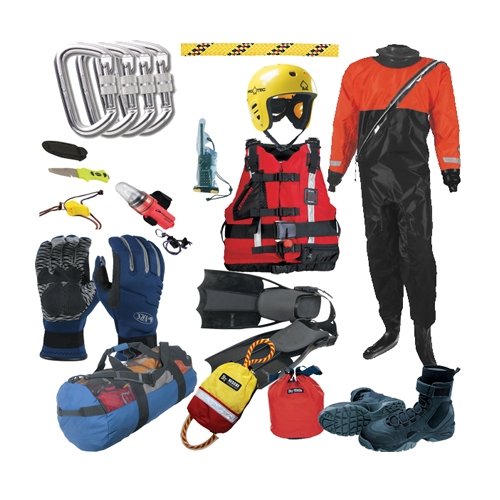
This is a system where a competent and able person must attach a line to themselves and the line must be attached to a strong point on board the vessel and monitored by a competent person at all times. The swimmer is then to swim out to the casualty and assist the casualty back to the boat upon which the decision will be made how best to get the casualty back on board.
Advantages
- Reassuring to the casualty to see assistance coming directly towards them;
- It can be set up by any crew member with very basic training;
- Quick and simple in operation;
- It enables the whole recovery process to be operated by one competent swimmer and a spotter;
- It is very self-explanatory and spans languages and cultures universally.
Disadvantages
- It requires the swimmer to be highly competent, trained and able to swim in rough conditions;
- The casualty could be irrational and dangerous to the rescuer;
- It requires the casualty to be cooperative;
- It causes the ship to have another person in the water;
- It highly increases the chance the rescuer could become injured.
Jason’s cradle
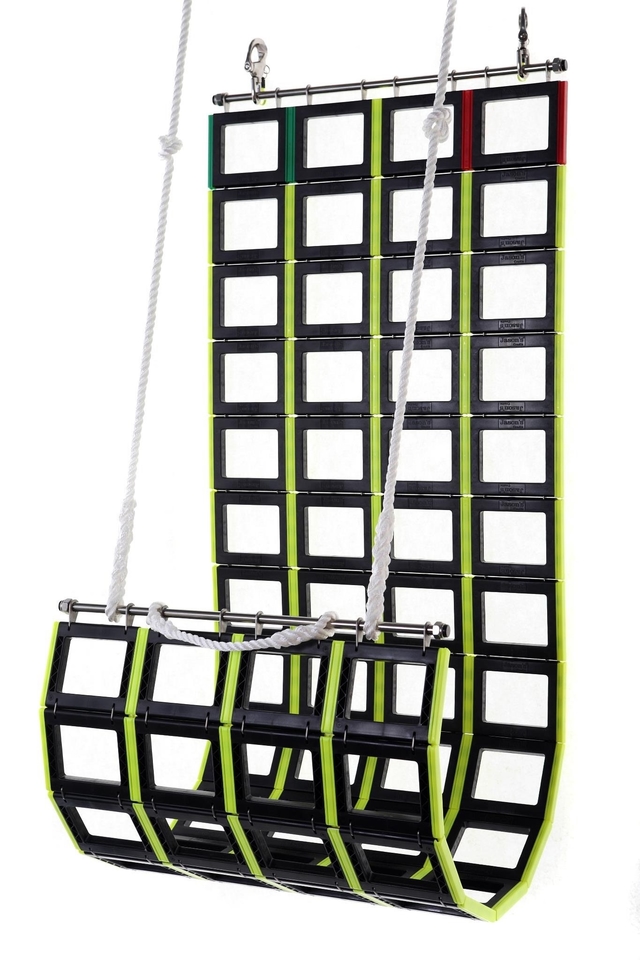
This is a system where a net is rigged on the side of the vessel and the casualty is lifted out of the water in the net. The system can be rigged on either side of the vessel and can be used in conjunction with a crane or by hand.
To be evaluated
Helicopter operations
This aspect was not assessed by the vessel but consideration needs to be made as to whether a rescue helicopter could touch & go on the foredeck to drop casualties to the vessel (by landing or harness/cradle) rather than having to return to land when at its capacity.
Revision History
| Version | Date | Editor | Revision History |
|---|---|---|---|
| 1.0 | 19 Jul 2019 | Christophe Guegan | Initial Commit |