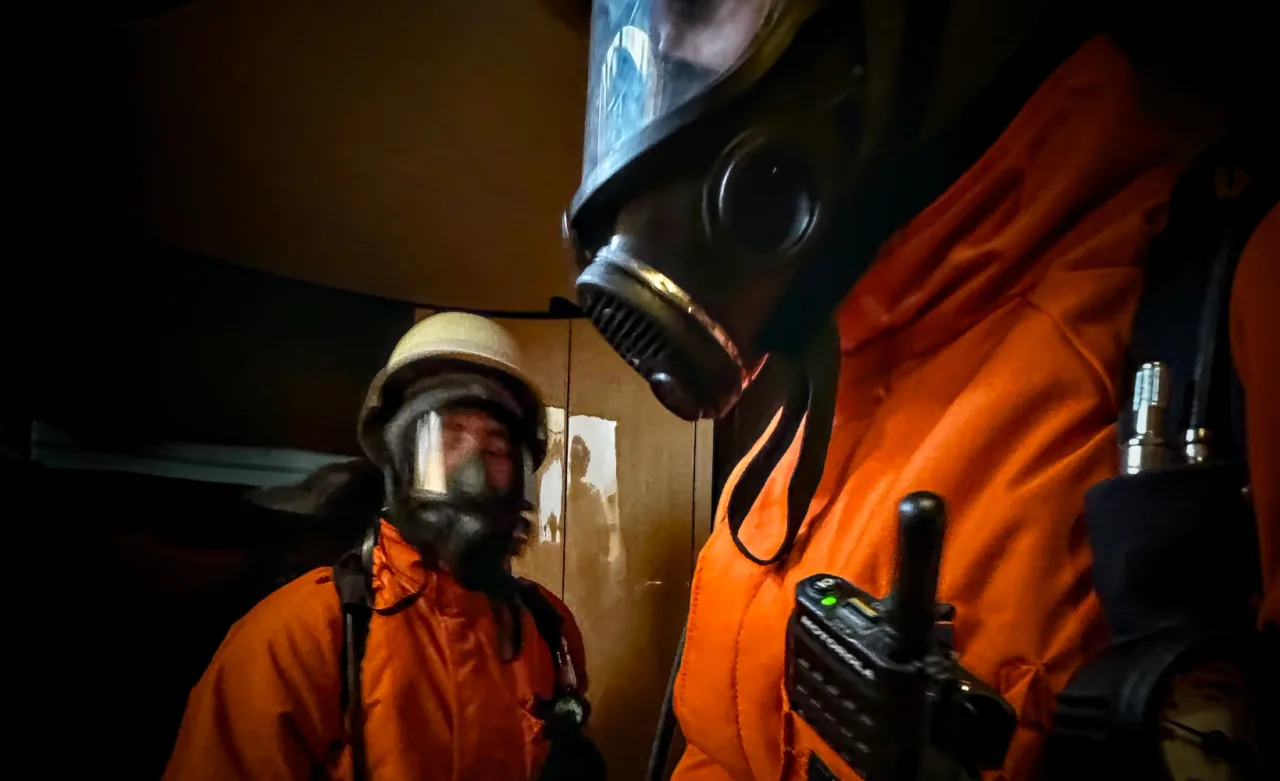
Emergency Drills on Superyachts
How to Turn Compliance into Real Readiness
Every SOLAS-certified yacht runs emergency drills — SOLAS Chapter III/19 and ISM Code Section 8 make sure of that. But a drill that satisfies the regulation and a drill that prepares a crew are not always the same thing. The difference is what a surveyor, and a real emergency, will expose.
A flag or class surveyor can tell within minutes whether a crew drills for real or drills for the logbook. It shows in the records, in the condition of the life-saving and fire-fighting equipment, and in how people answer when asked to walk through a scenario. Here is what separates the crews that are genuinely ready.
Plan the year, not the month
The statutory intervals — monthly fire and abandon-ship, enclosed-space rescue every two months, emergency steering every three — are the floor, not the plan. Map all of them onto a twelve-month drill matrix and load it as recurring tasks so nothing slips past its interval. Build it once, against a standard drill-schedule template, and the system prompts the crew — there's nothing to memorise, just a schedule to follow.
Vary the scenario, and the failure
Running the same engine-room fire every month builds routine, not competence. Move the fire. Make the casualty a guest in a cabin. Disable the primary fire pump so the team has to fall back to the secondary. "Incapacitate" a senior officer so someone junior has to lead. A crew that can only follow a script will freeze the moment reality goes off-script.
Involve everyone the muster list names
Drills are not just for deck and bridge. Interior crew, engineers, and chefs all carry duties on the muster list — and a drill is how you find out whether they actually know them. Tie your drill calendar to crew rotations, so every new joiner is tested on the scenarios that matter soon after they arrive. Put a junior stew in the center of the scenario. Create a bloody scene around the chef in the galley. Extract the engineer from the bilge.
The debrief is the drill
The learning happens after the alarm stops. Capture every weakness — a slow-priming pump, an awkward liferaft cradle, a crew member unsure of their station — as a corrective action with an owner and a date. Let the crew talk and share feelings at the end of the drill. Then record it properly: a drill that isn't reported can't be demonstrated to a surveyor or the DPA, and counts for little.
Where a digital SMS makes it stick
Most yachts don't fail their drill obligations because the crew won't drill. They fail because the schedule lives in someone's head and the records are scattered across notebooks and the logbook. A digital safety management system keeps the schedule, the muster list, the emergency checklists, and every signed-off drill report in one searchable place — so when Port State Control asks for a year of records, the answer is one search, not an afternoon in the filing cabinet.
That is exactly what the Yachting Concept Monaco SMS is built to do: one source of truth for drill schedules, muster lists, and the records that prove your crew is ready. Get in touch to see how it would work on your yacht.